
Determining fault after a trucking accident comes down to evidence showing what happened and who contributed to the crash. In many cases, more than one party may share responsibility.
If you’re dealing with serious injuries, a San Luis Obispo truck accident attorney at Ernst Law Group can step in to investigate the crash and hold the right parties accountable.
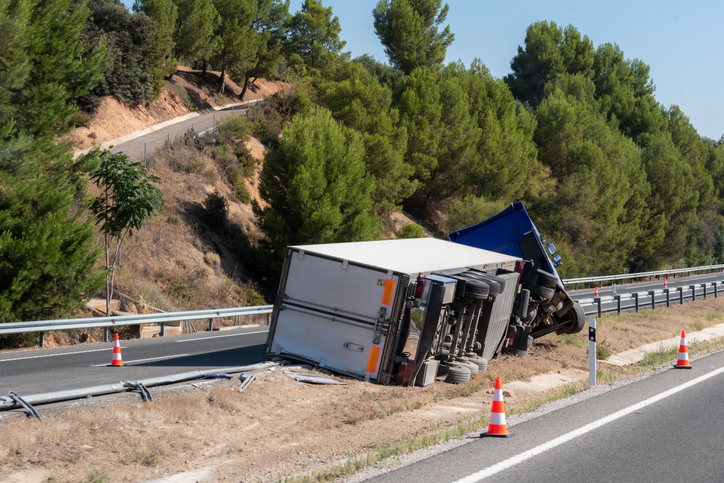
Who can be held liable in a trucking accident?
Liability in a trucking accident isn’t always limited to the driver. Several parties may be responsible, including:
- The truck driver
- The commercial trucking company
- The truck manufacturer
- The loading company
- Tire or truck component manufacturers
- Other motorists
Figuring out who’s responsible often takes a closer look at how the truck was operated, maintained, and loaded. In many cases, more than one party shares responsibility.
What evidence is used to determine fault in a truck accident?
Truck accident victims can rely on many sources of evidence to establish who is liable for their damages, such as:
- The police report and any citations issued
- Data from the truck’s event data recorder (EDR)
- Cell phone or GPS records
- Traffic, security, or dashboard cameras
- Witness statements
- Maintenance and inspection records
This kind of evidence helps show how the crash happened and who should be held responsible.
How do investigators determine what caused a trucking accident?
Investigators look at patterns in the evidence to understand what led to the crash. That can include signs of driver fatigue, distraction, or impaired driving.
They also review trucking company records, such as driver logs, training history, and maintenance reports. Violations of federal safety rules, including hours-of-service limits, often play a role in serious crashes. And in more complex cases, accident reconstruction experts may step in to piece together how the collision happened.
How does comparative fault work in San Luis Obispo trucking accidents?
California follows a pure comparative fault system. This means you can still recover compensation even if you were partly responsible for the crash.
Your recovery is reduced based on your share of fault. For example, if you are found 20% at fault, your compensation is reduced by 20%. Even in cases where someone is mostly at fault, they may still recover a portion of their losses.
In practice, these cases often come down to how fault is assigned. The goal is to show where other parties, like the truck driver or trucking company, failed to meet their responsibilities and contributed to the crash.
Can multiple parties share fault in a truck accident?
It’s common to find that multiple parties are at fault in truck accident claims, making it complicated to establish individual blame. However, it can also open the door to a better recovery for accident victims since their lawyers can negotiate with multiple insurance companies to cover all losses.
In a truck collision case, fault is divided among all parties, with the total adding up to 100%. Under California Civil Jury Instructions, juries evaluate each party’s duty of care, whether that duty was breached, and whether that breach directly caused the injury.
Get guidance after a trucking accident in California
If you were injured in a trucking accident, figuring out fault is one of the first steps toward moving forward. These cases often involve multiple companies and detailed evidence.
Ernst Law Group works with people across San Luis Obispo and Los Angeles to investigate serious crashes and deal with insurance companies. Call (805) 541-0300 to contact us online to set up a free consultation. You can talk through what happened and get a clear sense of your next step.