
Yes. The Food and Drug Administration (FDA) has cleared blood tests that help evaluate a traumatic brain injury (TBI), specifically mild TBI, and as of April 2024, one version works with whole blood and delivers test results in 15 minutes without sending anything to a lab.
Getting the right medical evaluation comes first. After that, a California traumatic brain injury lawyer at Ernst Law Group can help you understand what your test results and the rest of your medical records mean for a claim.
What FDA-cleared blood tests exist for traumatic brain injury?
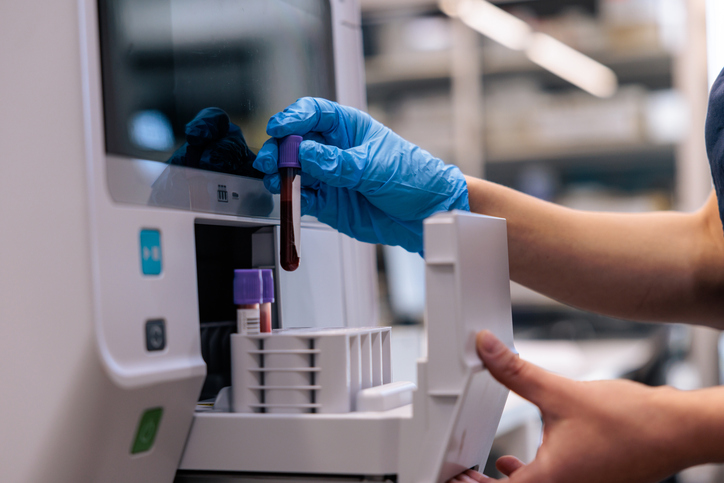
The one you’re most likely to encounter today is Abbott’s i-STAT TBI test. A small blood sample goes onto a test cartridge, and results come back in about 15 minutes, with no lab involved.
Earlier versions, including a 2018 test and Abbott’s original i-STAT TBI Plasma test, needed extensive lab processing, which kept them out of most emergency rooms. That changed in April 2024, when Abbott received FDA clearance for a version that runs on whole blood right at the patient’s bedside. It’s why the test is now realistic to get during an ER visit or at an urgent care clinic.
How does a TBI blood test work?
The test measures two biomarkers, glial fibrillary acidic protein (GFAP) and ubiquitin C-terminal hydrolase L1 (UCH-L1), that rise in the blood after a brain injury. A small blood sample goes onto the test cartridge, the cartridge goes into the i-STAT Alinity device, and test results come back in 15 minutes.
The FDA’s clearance letter covers patients 18 and older with suspected mild traumatic brain injury (mTBI) showing signs such as loss of consciousness or confusion, within 24 hours of the injury. It’s cleared for use in emergency departments and, now that it works with whole blood, in urgent care clinics too.
Can a blood test replace a CT scan for brain injury?
No. A negative result is a strong sign there’s no bleeding a CT scan would catch, so some patients can skip that scan and the radiation exposure that comes with it. A positive result doesn’t diagnose a brain injury on its own. Doctors still order a CT scan to see exactly what’s happening inside the skull. The blood test narrows down who needs a CT scan; it doesn’t replace one.
Why do TBI blood test results matter for your injury claim?
Doctors have long used the Glasgow Coma Scale to score a patient’s level of consciousness after a head injury, but that score relies partly on how the patient responds in the moment. A TBI blood test is a different kind of TBI assessment tool: the result comes from a regulated medical device, not a subjective exam, so it’s harder for an insurance adjuster to write off as exaggerated symptoms.
California Civil Code section 1714 makes a person responsible for injury caused by a failure to use ordinary care. That’s the legal basis for holding a negligent driver, property owner, or other party accountable for a brain injury they caused, and objective evidence, like an elevated TBI blood test result alongside the rest of your medical records, is part of what proves the injury happened the way you say it did.
How Ernst Law Group can help after a brain injury
A brain injury can change how you think and how you feel, sometimes for a long time, and sorting out a claim while you’re still dealing with that is a lot to manage alone. Ernst Law Group has represented brain injury victims across California for more than 35 years from our office in San Luis Obispo, and we work on a contingency fee basis.
Call us at (805) 541-0300 or contact us online to schedule your free consultation and go over your medical records and what they mean for your case.